Tuesday, October 5, 2021

Tuesday, October 5th

 1. Introduction to Graphic Novels. 

"What is a graphic novel?" Infographic

2. "How to Read a Graphic Novel"- Michael Chaney

3. Graphic Novel TermsQUIZ on TUESDAY, OCTOBER 12th 


March Reading Schedule: 
October 7th: 35
October 12th: 55 (Terms quiz)
October 14th: 69 (Reading quiz) 
October 18th: 88
October 19th: 103
October 21st: Finish the book


Sunday, August 22, 2021

Back to School Night!

Back to School Night is Monday, August 22nd! 

Back to School Night Schedule

Advisory          6:30 - 6:37

Hour 1                      6:42 - 6:49

Hour 2                   6:54 - 7:01

Hour 3                   7:06 - 7:13

Hour 4                    7:18 - 7:25

Hour 5                      7:30 - 7:37

Hour 6                      7:42 - 7:49

Hour 7                      7:54 - 8:01 


Thursday, March 18, 2021

Thursday, March 18th


Amy Tan- 1952- born in the U.S. to immigrant parents from China, Amy Tan rejected her mother’s expectations that she become a doctor and concert pianist.  She chose to write fiction instead. Her iconic novel, The Joy Luck Club, paved the way for many following authors of Asian descent.  Her novels are The Joy Luck ClubThe Kitchen God's WifeThe Hundred Secret SensesThe Bonesetter's Daughter, Saving Fish from Drowning, and The Valley of Amazement, all New York Times bestsellers. Her works have been translated into 35 different languages. Tan served as co-producer and co-screenwriter on the film adaptation of The Joy Luck ClubAmy Tan has served as lead rhythm “dominatrix,” backup singer, and second tambourine with the literary garage band, the Rock Bottom Remainders, whose members included Stephen King, Dave Barry, and Scott Turow. Their yearly gigs raised over a million dollars for literacy programs. - From the Steven Barcaly Agency Biography 

___________________________________

Mrs. Reith's Agenda-

Open Letter Peer Editing

Today you will be completing peer edits of your classmates' open letters. Make sure you have copied the peer-edit document from Tuesday (I have included it in today's folder also) at the end of your rough draft and submitted the rough draft to turnitin. This must be done before peer edits can be completed.

1, Go to turnitin.com (you should have created your account on Tuesday). Select the Peermark assignment. This should pull up a classmate's assignment for you to peer edit. Follow the peer edit guidelines that were copied to the end of the rough draft. 

Peer-editing etiquette:

  • Read through the piece twice before adding comments. The first reading is to get familiar with the piece, and the second reading is your opportunity to really try to understand what is being said and how. Your most valuable editing advice will be focused on content, organization, and style.
  • Read as if you are the intended reader. Read for content, not for grammatical errors. 
  • It is not your job to fix the problem. Bring problems to the writer's attention and do not take on the writer's work as your own. Point out what does and doesn't work for you as a reader.
  • Constructive criticism: "Good job" does not suffice. Offering constructive criticism can be as simple as "Remember to restate your thesis in your final paragraph." Be respectful of your classmate's work.
  • A good approach is to start by telling the writier what you like and then mention what doesn't work. The writer will learn nothing from the exercise if you leave comments such as "looks good to me." Your comments must be constructive- instead of saying, "This is really muddled," try saying something like, "I wasn't completely clear about what this sentence meant."
  • Be specific. Don't make blanket judgements or vague statements. Say WHY something worked or didn't work.

Tuesday, March 16, 2021

Tuesday, March 16th


 Women's History Month


Ruth Bader Ginsburg, Associate Justice of the Supreme Court
was born in Brooklyn, New York, March 15, 1933. She married Martin D. Ginsburg in 1954, and has a daughter, Jane, and a son, James. She received her B.A. from Cornell University, attended Harvard Law School, and received her LL.B. from Columbia Law School. She served as a law clerk to the Honorable Edmund L. Palmieri, Judge of the United States District Court for the Southern District of New York, from 1959–1961. From 1961–1963, she was a research associate and then associate director of the Columbia Law School Project on International Procedure. She was a Professor of Law at Rutgers University School of Law from 1963–1972, and Columbia Law School from 1972–1980, and a fellow at the Center for Advanced Study in the Behavioral Sciences in Stanford, California from 1977–1978. In 1971, she co-founded the Women’s Rights Project of the American Civil Liberties Union, and served as the ACLU’s General Counsel from 1973–1980, and on the National Board of Directors from 1974–1980. She served on the Board and Executive Committee of the American Bar Foundation from 1979-1989, on the Board of Editors of the American Bar Association Journal from 1972-1978, and on the Council of the American Law Institute from 1978-1993. She was appointed a Judge of the United States Court of Appeals for the District of Columbia Circuit in 1980. President Clinton nominated her as an Associate Justice of the Supreme Court, and she took her seat August 10, 1993. Justice Ginsburg died on September 18, 2020. *Biography taken from Supreme Court website
________________________________________

Mrs. Reith's agenda: 

1. Open Letter Project Work Day

Today you will be working on your open letter. Use this time wisely. Work diligently and take the opportunity to ask any questions you may have. 

In today's folder you will also find a link titled "Open Letter Peer-Edit." Follow the link and copy the document to the bottom of your rough draft. You will need to have this attached to your document for peer-editing on Thursday. Also make sure you read through the document to make sure you are meeting expectations. 

Monday, March 15, 2021

Monday, March 15th


WOMEN'S HISTORY MONTH

Margaret Atwood (1939)- A Canadian novelist, poet, essayist, and teacher. She is an author of over 50 works. Her works include: Blind Assassin, Cat's Eye, The Handmaid's Tale, and The Testaments (The critically praised sequel to The Handmaid's Tale). In 2016 ,Atwood published her first graphic novel. Ms. Atwood's works challenge readers to think about politics, gender, and language in their own lives through the dynamic worlds she creates.


___________________________________________________
Mrs' Reith's Agenda: 

1. Introduce Gatsby/Modernism Open Letter project.
2. Go over expectations and tasks for project completion.
3. Begin working on Open Letter tasks/project.

***Important Note: Please finish reading and annotating The Great Gatsby by Monday, March 22nd.***

Thursday, March 11, 2021

Thursday, March 11th

 Image result for Mary ShelleyFrankenstein 1818 edition title page.jpg

Women's History Month
Mary Wollstonecraft Shelley (1797-1851): English novelist. Child of famous author, philosopher, Mary Woolstonecraft, and political philosopher, William Godwin. Mary Shelley began a relationship with a then-married, Romantic Poet, Percy Shelley. They traveled together, and famously spent one summer in Switzerland with her husband, and poet, Lord Byron. It was during this time where Mary Shelley developed the idea for her most-famous work, Frankenstein, or The Modern Prometheus (1818).
________

Mrs. Reith's Agenda: 

Today, we will begin class with a quiz over chapters 4 and 5 of The Great Gatsby. Then, we will watch more of the 2013 version of The Great Gatsby directed by Baz Luhrmann. You will need:

Your Novel vs. Film Graphic Organizer assignment so you know what you are looking for as you watch
Notebook and writing utensil (or whatever you use to take notes)

Tuesday, March 9, 2021

Tuesday, March 9th

  Image result for gloria steinemImage result for gloria steinem book

Women's History Month 

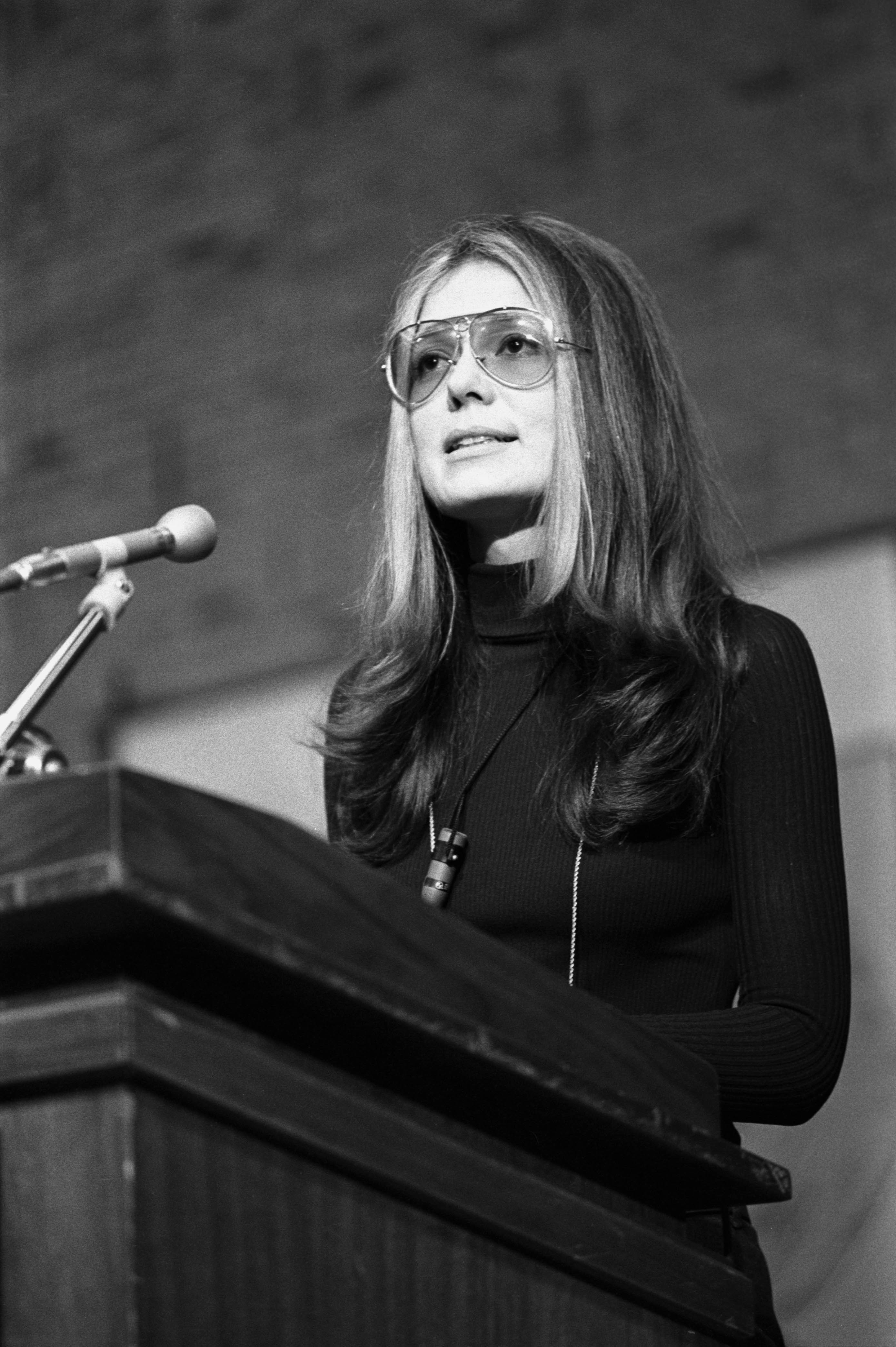
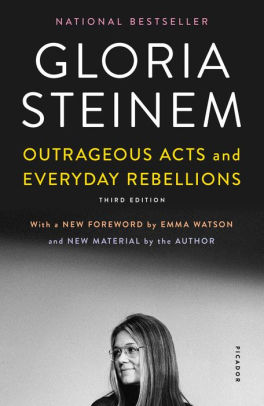
Gloria Steinem (1934-): American journalist, political activist, and feminist. Ms. Steinem co-founded Ms. Magazine. In 1969, Steinem published an article, "After Black Power, Women's Liberation." This brought her international attention as a feminist leader. Ms. Steinem is also one of the founding members of the National Women's Political Caucus. From her website: "She is particularly interested in the shared origins of sex and race caste systems, gender roles and child abuse as roots of violence, non-violent conflict resolution, the cultures of indigenous peoples, and organizing across boundaries for peace and justice."

____________________________________________________________________

Mrs. Reith's Agenda: 
Today's Agenda:

1. Review of POV in literature.
2. Description and short discussion of a reliable vs. unreliable narrator.
3. "Who Can You Trust?" video (TAKE NOTES)
4. Assignment: The Great Gatsby Reliable/Unreliable Narrator. This will be homework if not finished in class.


Homework: Please remember to have chapter 5 read before class on Thursday.

Monday, March 8, 2021

Monday, March 8th


Happy International Women's Day! 


Rupi Kaur: 
From her bio... As a 21-year-old university student Rupi wrote, illustrated and self-published her first poetry collection, milk and honey. Next came its artistic sibling, the sun and her flowers. These collections have sold over 8 million copies and have been translated into over 42 languages. Her most recent book, home body, debuted #1 on bestsellers lists across the world. Rupi’s work touches on love, loss, trauma, healing, femininity, and migration. She feels most at home when creating art or performing her poetry on stage.

 rupikaur.com

47 Books by Female Authors of Asian Descent

Celebration of Women in Translation- Asian Authors

___________________________________________________

Mrs. Reith's Agenda: 

Today, we will begin watching the 2013 version of The Great Gatsby. 

You will also be assigned the Novel vs. Film Graphic Organizers assignment. As you watch the film, take notes about similarities and differences between the elements included on the graphic organizers. My suggestion to you is to take notes as you are watching, and then organize your thoughts before transferring that information to the graphic organizer later. 

Friday, March 5, 2021

Friday, March 5th


Chimamanda Ngozi Adichie (1977)- A Nigerian novelist, short story and non-fiction writer. She moved to the United States to attend college. Her stories often address navigating in the US as a person of color and how race and gender impact daily lives. Her works include: Purple Hibiscus, Americanah, and We Should all be Feminists.


Chimamanda Ngozi Adichie- "Danger of a Single Story" Ted Talk

25 Must Reads for Women's History Month
________________________________________________________

Mrs. Reith's Agenda: 

1. Complete the March 5 Bell Ringer as you enter class.
2. Brief review of yesterday's lesson.
3. Sentence Length presentation - have your notebooks out and be ready to take notes.
"Change Your Mood" Activity

Homework: Gatsby Passage Sentence Analysis assignment

Thursday, March 4, 2021

Thursday, March 4th


Women's History Month

Virginia Woolf (1882-1941)- British Modernist author known for her use of stream of consciousness. She was a powerful voice in the women's right's movement and is often credited as an author to inspire feminism. She struggled with mental health from an early age. This would follow her throughout her life and ultimately led to her death. Her works include: Mrs. Dalloway and the short work, "A Room of One's Own."

_______________________________________________________________

Mrs. Reith's Agenda: 

Tuesday, March 2, 2021

Tuesday, March 2nd


Louisa May Alcott (1832-1888)- American author best known for writing Little Women (1871), based on the Alcott home.  She grew up in a Transcendentalist home and around authors such as Henry David Thoreau, Ralph Waldo Emerson. Alcott was a suffragist, abolitionist, and feminist.

______________________________________________________________________

Mrs. Reith's agenda: 

Reading Day - Chapter 4 of The Great Gatsby

Before starting chapter 4, we will briefly discuss the significant events that have happened so far in the first three chapters. What happened? What do we know about the characters? Where is it set? What is Fitzgerald telling us about the American Dream and Modernism?

Then, we will be reading chapter 4 together. This will be an ACTIVE reading session. Have your notes and writing utensils out and ready to go. 

Monday, March 1, 2021

Monday, March 1st


   March is WOMEN'S HISTORY MONTH! 

What to watch for Women's History Month: PBS.ORG "What to Watch for Women's History"
___________________________________________________________

Mrs. Reith's Agenda: 

Modernism Review and Modernism in The Great Gatsby

Today's Agenda:

1. As soon as you get to class, start on the Bell Ringer assignment in Schoology.

2. Lesson over Modernism

3. Modernism in The Great Gatsby Jamboard

4. Modernism Exit Ticket

No homework today, unless you have not yet finished the Chapters 1-3 Close Reading assignment. This is due today.

Friday, February 26, 2021

Friday, February 26th


Angie Thomas- 

From her website bio: Angie Thomas was born, raised, and still resides in Jackson, Mississippi as indicated by her accent. She is a former teen rapper whose greatest accomplishment was an article about her in Right-On Magazine. She holds a BFA in Creative Writing from Belhaven University and an unofficial degree in Hip Hop. Angie is an inaugural winner of the Walter Dean Myers Grant 2015, awarded by We Need Diverse Books. Her debut novel, The Hate U Give, started as a senior project in college. Ms. Thomas' books also include: On the Come Up and  Concrete Rose, a prequel to The Hate U Give. 

_____________________________________________________________________

Mrs. Reith's Agenda: Close Reading and Annotations of The Great Gatsby

1. Review of how to close read and annotate

2. Begin work on Gatsby Chapters 1-3 Close Reading

What does it mean to close read?

Close reading is a method of literary analysis that focuses on specific details of a text in order to find deeper meaning within it. Being able to close read effectively is important because it will help you become independent readers who can interpret a text and connect with it on a deeper level.

What does it mean to annotate?

To annotate means to underline or highlight key words or phrases- anything that strikes you as surprising or significant, or anything that raises questions- and making notes about these words or phrases in the margins. Responding to a text in this way forces the reader to pay close attention and really think about the text. This practice is the first step in moving from a reader to a writer.

When annotating, look for patterns in what you are noticing about a text. Look for contradictions, repetitions, and similarities. Look at the figurative language. Ask questions about patterns and figurative language. 


Thursday, February 25, 2021

Thursday, February 25th


Dr. Yaba Blay-

From her website bio: Dr. Yaba Blay is an Ghanaian American professor, scholar-activist, public speaker, cultural worker, and consultant. whose scholarship, work and practice centers on the lived experiences of Black women and girls, with a particular focus on identity/body politics and beauty practices. Her most recent book, One Drop, callenges narrow perceptions of Blackness as both an identity and lived reality to understand the diversity of what it means to be Black in the US and around the world.
____________________________________________

Mrs. Reith's Agenda: 

Today we will be using Kahoot to do a review of Modernism/Modernity, historical context in The Great Gatsby, characterization, setting, and The American Dream. 

You need to have a solid foundation of these concepts before we move on to the next major assignment, which will be a close reading and annotation assignment. 

I will give you 10-15 minutes at the beginning of class to study your notes and other class materials before the Kahoot.

Tuesday, February 23, 2021

Tuesday, February 23rd


James Baldwin (1924-1987) 
Mr. Baldwin was an essayist, playwright, poet, and activist. His works address class, race, sex distinctions in Western Society during the twentieth Century. His works include: Go Tell It on the Mountain (1953), Giovanni’s Room (1956),  Notes of a Native Son (1955),  Another Country (1962), and If Beale Street Could Talk (1974). After a stint of living in France, Baldwin returned to the United States in 1957 to be an active participant in the Civil Right's Movement. 
____________________________________________________________

Mrs. Reith's agenda- 

1. Gatsby quiz.
2. Work on setting/travel brochure (in Schoology) 

Monday, February 22, 2021

Monday, February 22nd


Image result for elizabeth alexander poem


Black History Month

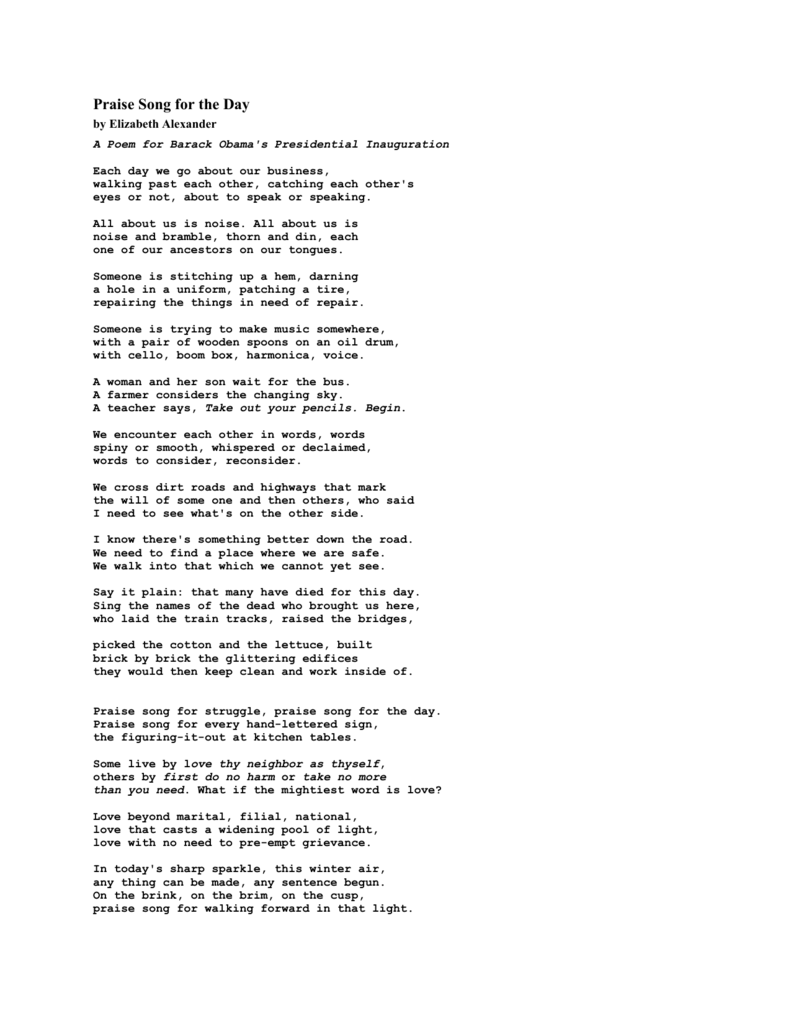
Elizabeth Alexander (1962-): A distinguished scholar and professor. Ms. Alexander is President of the Andrew W. Mellon Foundation- one of the largest financial supporter of arts and humanities in higher education. Elizabeth Alexander wrote and delivered "Praise Song for the Day" at President Obama's 2009 Inauguration. Her works include, American Sublime, a book of poetry, and The Light of the World, a memoir.

__________________________________________________________

Mrs. Reith's Agenda: 

1. Video: The Importance of Setting in a Story

2. Short class discussion about the significance of setting in The Great Gatsby

3. Activity: Gatsby Chapters 1-3 Setting Contrasts. In this activity, we will not only be looking at the settings of chapters 1-3, but we also revisit the theme of The American Dream and how it looks in each chapter. 

TOMORROW we will be continuing with setting in The Great Gatsby through another activity. 

Friday, February 19, 2021

Friday, February 19th


 Black History Month

Sojourner Truth (1797-1883): An abolitionist, civil and women's right's activist. Ms. Truth was born into slavery, but ran away and successfully sued for the return of her son who was sold illegally into slavery. After moving to New York City, Truth was a charismatic preacher. Inspired by Frederick Douglass, Elizabeth Cady Stanton, and Susan B. Anthony, Truth became a powerful voice for the abolitionist and woman's suffrage movement. In 1851, Sojourner Truth delivered her most famous speech, "Ain't I a Woman," addressing the issues of gender and racial inequality.

Read Ms. Truth's speech here: "Ain't I a Woman"- https://www.thesojournertruthproject.com/

____________________________________________________________

Enrollment information: 

As seniors, you will have 3 options for an English class. Your choice is determined upon your future plans and needs. 

1. College Credit English. Applications are due on MONDAY to Counseling Office. 

2. English Honors 12. Media literacy. 

2. English 12. Media literacy. 

Mrs. Reith's Agenda: 

Happy Friday! 

The plan for today is as follows:

1. Symbolism Presentation (In Schoology). Read through and take notes. 

2. Open and save Gatsby Symbolism Log- Fill in what you are already able to. You will need to keep this log and fill it out as you identify evidence of symbolism in the novel. It will be submitted for points after we have finished reading the book.

3. Begin reading chapter 3 of Gatsby. 

4 Complete Discussion Board posted in Schoology. 

Homework for MONDAY: finish reading chapter 3 if not completed in class. If you have not turned in your groups Historical Context Research Summary & Response Assignment, that will be need to be completed for homework as well and turned in by tomorrow (Saturday) night. 

Thursday, February 18, 2021

Thursday, February 18th

Image result for ibram x kendi

 Black History Month

Ibram X. Kendi (1982-)  Historian and author. Founding director of the AntiRacist Research and Policy Center. He is the author of The Black Campus Movement, Stamped from the Beginning: The Definitive History of Racist Ideas in America, Four Hundred Souls, and How to be an Antiracist.
_____________________________________________________

1. Black History Month- 

Mrs Reith’s Agenda for today:

1. Gatsby Chapter 2 Reading Check Quiz. This should only take about 5 minutes to complete at the beginning of class.

2.  Video: Direct and Indirect Characterization

3.  Gatsby Characterization Activity. The first page will be completed as a class, then you will break off into groups to complete the graphic organizers together. If your group does not finish before the end of class, it will be homework.

4.  Tomorrow (Friday), we will read chapter 3 as a class.

What is characterization, again?

CHARACTERIZATION DEFINITION: The manner in which the author creates the character. (Characters are vehicles for the author's purpose.)

Thursday, February 11, 2021

Thursday, February 11th


Image result for Ta nehisi coatesImage result for Ta nehisi coates

Black History Month

Ta-Nehisi Coates (1975-): American author and journalist. His writings address cultural and social issues and the American experience. Coates' works include: Between the World and MeBlack Panther; The Beautiful Struggle. Mr. Coates is a "Genius Grant" recipient for the MacArthur Foundation.

Here is a link to articles written by Mr. Coates in The Atlantic: The Atlantic Author- Ta-Nehisi Coates

Here is a link to: 50 Amazing Books by Black Authors- Past 5 Years
____________________________________________________________

1. Black History Month

2. Harlem Renaissance and Modernism. 

3. Mrs. Reith's class agenda:

THIS IS AN ANTICIPATORY ACTIVITY DAY. 

The purpose of today is to prepare you for the upcoming unit over F. Scott Fitzgerald’s The Great Gatsby. This gives you the opportunity to become familiar with themes and conflicts present in the novel. The activity will be done in conjunction with presenting the New York setting map, which will familiarize you with the setting of the novel, as well as a reading of an excerpt from Chapter 1 of the book. 

The Great Gatsby Anticipatory Activity. 
  • As a class, we will go through each slide of the presentation. You will be encouraged to share whether you agree or disagree with the statement on the screen, and give your reasoning.
  • Presentation of the New York Gatsby Setting Map. This is to familiarize you with the geopgrahical setting of the novel. It plays a subtle, yet important part of the story. 
  • Gatsby Chapter 1 Excerpt. In groups of 2-3, you will read through the excerpt and answer the questions at the bottom. This assignment will be the bridge between what was previously learned about the American Dream and our upcoming reading of The Great Gatsby
  • Assign The Great Gatsby Chapter 1 Analysis Questions. We will briefly go over these questions as a class. Use this to your advantage to become familiar with the book and what kinds of questions you should be considering as you read. You will not be given anticipatory questions at the beginning of each chapter.
  • If there is extra time in class, I will read to you the introduction to the novel. 
  • No homework assigned for today! 

Monday, February 1, 2021

Monday/Tues., February 1st-2nd & Thurs./Friday, February 4th -5th

Image result for Jason reynoldsImage result for Jason reynolds poem
Black History Month
Jason Reynolds (1983-) is a American Poet and Novelist, and current National Ambassador for Young People's Literature. Being inspired by rap, Reynolds starting writing poetry at age 9. Reynolds works to create characters with authentic voices and experiences. His books include All American Boys, Long Way Down, Look Both Ways

Black History Month

Audre Lorde (1934-1992) was an American Author, Feminist, and Civil Rights Activist. Lorde's writings served as a call-to-action for issues such as inequality and sexism. #BlackHistoryMonth #LiteraryGiants   


Black History Month 
Alex Haley (1921-1992)- Mr. Haley served in the US Coast Guard for twenty years before pursuing writing. He is best known for his novels, Roots and The Autobiography of Malcolm X.

Image result for Lorraine Hansberry

Black History Month 
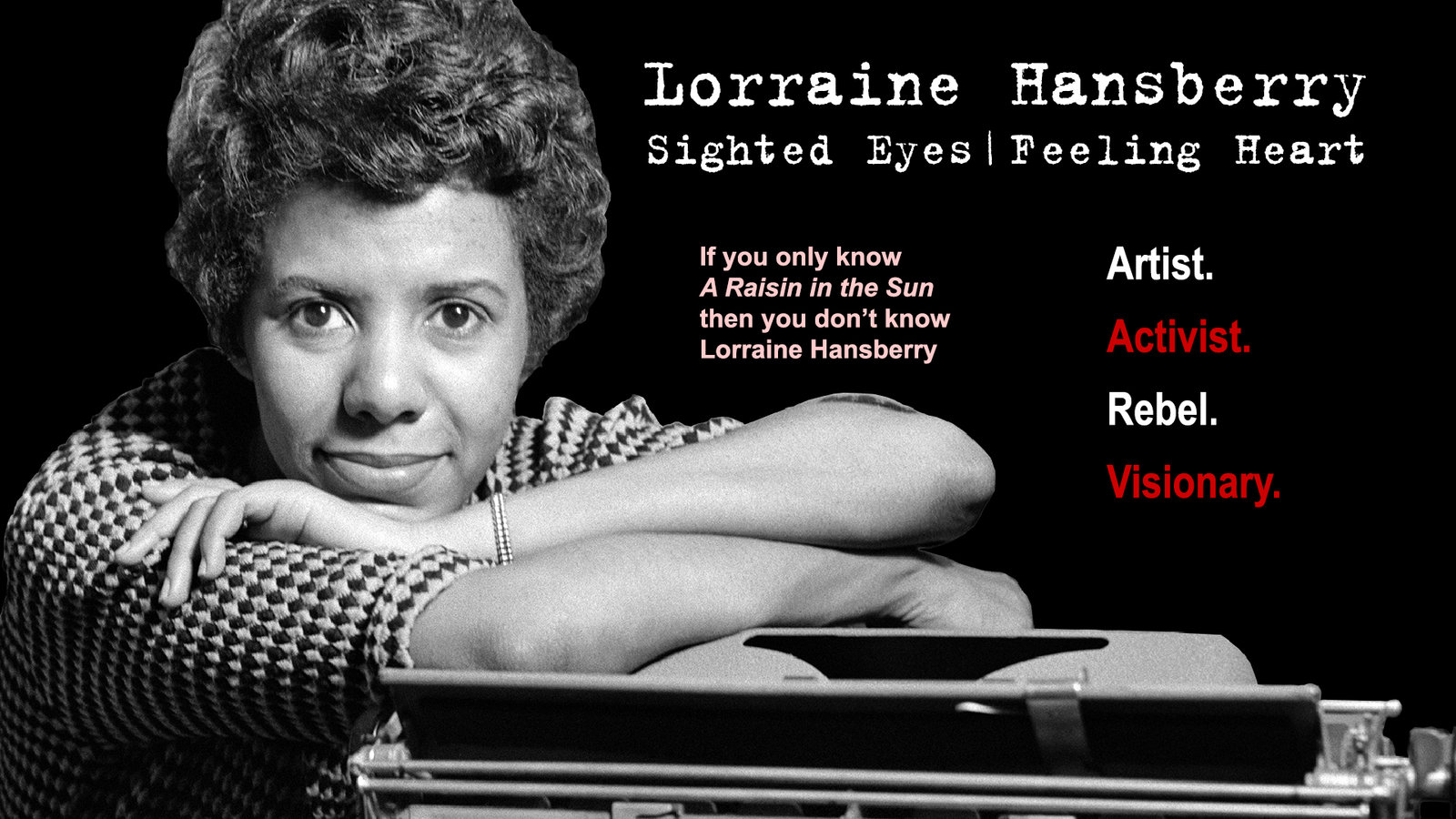
Lorraine Hansberry (1930-1965)- Ms. Hansberry was the first African American female author to have a play on Broadway, A Raisin in the Sun.  As a journalist, Ms. Hansberry worked to promote the Civil Rights Movement, but also to expose global imperialism and colonialism.


___________________________________________________________

In-Class for Monday, February 1st and Thursday, February 4th: 

1. Review and small group discussion of Modernism. (Jamboard) Modernity/Modernism Jamboard

2. Expository writing- writing that seeks to explain, illuminate, or 'expose.' 

Types of Expository Writing... (or ways to 'explain,' 'illuminate,' or 'expose'): 

  • Problem and Solution.
  • Cause and Effect.
  • Compare and Contrast.
  • Definitions and Classification
  • How-to/Process

Writing assignment: 

Describe the Modernist movement as you understand it, using concrete examples from T.S. Eliot’s ‘The Love Song of J. Alfred Prufrock.”

You will need to provide textual examples from the primary text ("Prufrock") AND support from one of your secondary sources (either over Modernism or "Prufrock"). 

3. "What Quotes?" brainstorming. Primary and Secondary source review. 

___________________________________________________________

In-Class for Tuesday, February 2nd and Friday, February 5th: 

4. Start drafting critical response. MLA formatting. 1-page written analysis. Works Cited page. 3 direct quotes. Due by Friday, February 5th (Group A) and Sunday, February 7th (Group B). 

Where to find:

  • MLA formatting (under important links)
  • MLA Works cited sample (writing links and/or Schoology assignment)
  • Transition words (writing links).
  • Citation of electronic sources (writing links and/or Schoology assignment)
  • "Prufrock" citation (Schoology assignment)
  • Correct integration of direct quotes (writing links)
  • 3 quotes for writing in your "What Quotes" assignment (Schoology)
  • Modernism notes/ideas- Check out yesterday's Jamboard. 

________________________________________________________________


Monday, January 25, 2021

Monday/Tuesday, January 24th/25th AND Thursday/Friday, January 28th/29th

Virtual class directions for (Group B) are located in Schoology folder. 

In-Person Class: 

Monday, January 24th and Thursday, January 25th

1.  Second semester expectations. 

2. Start to Modernism.  Think about what is revealed about the idea of Modernism through this quote by T.S. Elitot. 

 “The term modernism refers to the radical shift in aesthetic and cultural sensibilities evident in the art and

literature of the post-World War One period. The ordered, stable and inherently meaningful world view of

the nineteenth century could not, wrote T.S. Eliot, accord with ‘the immense panorama of futility and

anarchy which is contemporary history.’.. rejecting nineteenth-century optimism, [modernists] presented a

profoundly pessimistic picture of a culture in disarray.”

3. Considering the general idea of Modernism, the TPCASTT method, do a close reading of T.S. Eliot's "The Love Song of J. Alfred Prufrock." DO YOUR BEST.  We are using this as an introductory activity to a philosophical shift in thought that will frame this unit. Think about what you are learning about Modernism from this poem.  You will turn in your annotated copy to Schoology. 

Epigraph translation: 

The poem begins with: A passage from Dante Alighieri’s Inferno (Canto 27, lines 61-66) spoken by Guido da Montefeltro in response to the questions of Dante, who Guido supposes is dead, since he is in Hell. The quotation comes from Dante’s exploration of the eighth circle of Hell, where he meets a man named Guido who is condemned for the rest of his life, and doesn’t even have his own body anymore, he is just a flame (“this flame would shake no more.”) Guido refuses to tell Dante why he has been sent to such a deep level of Hell as he has never met someone who can leave the place and fears people on earth with find out what he did. He is afraid that his reputation will be ruined. However, since he believes it is impossible for Dante to leave, he tells him of his sins anyway, but of course Dante does return from Hell.

 This selection hints that the poem is about bad people masking themselves to be good because the clip is about a man, Guido, in Hell talking to Dante. It is about the importance of his reputation and how he does not want people on Earth to know what he did to end up in Hell. Guido believes that Dante will not be able to tell people on Earth about his sins, but unfortunately this is not the case. J. Alfred Prufrock may be worried about his reputation as well as Guido and therefore confess’ his “love song” to the audience who will not be able to share it with other people. The poem is a confession, just as Guido confesses his sins to Dante.

The flame in which Guido is encased vibrates as he speaks:

   “If I thought that I was replying to someone who would ever return to the world,
    this flame would cease to flicker. But since no one ever returns from these depths alive, 
    if what I’ve heard is true, I will answer you without fear of infamy.”

Tuesday, January 25th and Friday, January 29th

4. After your initial close reading is done, we will gather in small groups to work through this poem. Discuss the poem, using the poetry guide. Complete the guide. You will individually turn this guide in to Schoology. DUE for class on Tuesday/Friday. We will work with this poem in class. Upload these questions by Friday, January 29th. 

5. Utilizing the database, JSTOR, you will research and find a secondary article/essay addressing Eliot's "Prufrock." Download the essay. Read and annotate. Upload the annotated copy to Schoology. Post in comments the following: 1. The author's claim. 2. The correct MLA citation for the essay. Upload by Friday, January 29th 

LSW LMC Research Page

Purdue OWL- Citing Electronic Sources

Watch the following videos for RESEARCH TIPS: 

Online Research Tips

Developing Keywords for Research

Quick Tips and Shortcuts Databases


Tuesday, January 19, 2021

Week of January 19th-21st

You have made it! The last week of semester 1! 

It is an interesting week bringing a close to a challenging semester. Therefore, as we are gearing up for a return to hybrid next week, I am letting you work at your own speed this week. I am sure there is a lot going on this week, with the semester end, so you have time to get things wrapped up. 

Therefore, we will NOT have a live class meeting this week. Open the folder for this week on Tuesday, and work at your own speed this week.  The two assignments are due by the end of the day on Friday. 

If you need ANY HELP! I am available for one-on-one meetings all this week! 

___________________________________________________

It is also Inauguration Week. We have been studying argument in conjunction with President Kennedy's 1961's Inaugural Address. 

We have examined how these addresses function as an analysis of the country's situation and an argument as to the plan for the upcoming four years. 

Therefore, for this week please complete the following: 

1. Watch Michael Beschloss, American Historian, discuss what makes an effective inaugural address. (Schoology folder)

2. Open up and make two copies of the inaugural address rubric. (Schoology folder)

3. Assignment #1: select one of the linked addresses of inaugural addresses and complete the handout/rubric. (Due by Friday)

4. Assignment #2: using the second copy of the rubric document, watch the 2021 Inaugural Address. The Inauguration starts at 10:30 on Wednesday. The swearing-in at 11:00. The address follows. You may watch it live or a video later. Use the guiding questions and rubric to evaluate the argument that President-Elect Biden presents in his address.  (Due by Friday) 

Let me know if you have ANY questions or need ANY help! 


Thursday, January 14, 2021

Thursday/Friday, January 14th/15th

  1. Small group work: Primary/Secondary evaluation. Toulmin application.  Turn in your own document by the end of the day to Schoology. 

Information Literacy Source Evaluation Checklist: 

C- Currency (dates) 

R- Relevance (relevance to topic) 

A- Authority (author credentials) 

A- Accuracy  (information is accurate, researched, free of fallacies) 

P- Purpose (why was this written? Who is the intended audience?) 

2. Fallacy quiz.

Homework:

1. Finish the written response portion of the small group work assignment. Submit to Schoology by the end of the day. 

2. Toulmin reflection post- Schoology. Complete by the end of Friday, January 15th. 


Monday, January 11, 2021

Monday/Tuesday, January 11th/12th

1. Review- Toulmin and logical fallacies.

Fallacy- “Fallacy” is another way of saying false logic. As a reader/thinker, it is important to be able to recognize fallacy in order to evaluate the validity of a source/research. Fallacies or rhetorical tricks deceive an audience with their style, drama, or pattern, but add little to a document in terms of substance. They are best avoided because they can actually detract from an argument's effectiveness. There are several techniques or “tricks” that allow the writer to rely on style without offering substantive argument, to obscure the central message, or twist the facts to their own gain

2. JFK Inaugural Address as argument- Discussion 

  • Look over annotations. Find three points of interest/questions/content examples. Jot these down in your notes. Make sure that they tie to specific references. 

3. Syllogism: (meaning-conclusion or inference) a deductive argument or form of reasoning in which a conclusion is drawn (whether validly or not) from two given or assumed premises. (Process of thinking) 

A=B
B=C
Therefore... A=C

For example: 

All roses are flowers (major premise). This is a rose (minor premise). Therefore, I am holding a flower (conclusion). (Valid deduction)

The scenery in Ireland is beautiful. I'm in Ireland. Therefore, the scenery must be beautiful. (Invalid/fallacious deduction) 

4. Witch- Monty Python Assignment

5. Logical fallacy quiz (postponed until Thursday/Friday)

__________________________________________

Homework for Thursday/Friday:

1. Reading secondary sources practice. Analysis of JFK's Inaugural address- Assignment posted in Schoology. 


Thursday, January 7, 2021

Thursday/Friday, January 7th/8th

1. Review Toulmin's Big 6. 

2. Small group discussion of paper example. 

3. Logical Fallacies: Fallacies are common errors in reasoning that will undermine the logic of your argument. Fallacies can be either illegitimate arguments or irrelevant points, and are often identified because they lack evidence that supports their claim. Avoid these common fallacies in your own arguments and watch for them in the arguments of others.

There are many fallacies... we are going to work with 10: 

Ad Hominem 
Straw Man
Appeal to Common Practice
Begging the Question
Slippery Slope
False Dilemma (either/or)
Red Herring
Post Hoc Ergo Propter Hoc
Hasty Generalization 
Appeal to Authority  

Homework for Monday/Tuesday: 

1. Read and take notes over the following 10 Logical Fallacies: Ten Logical Fallacies- Explanations and Examples  YOU WILL HAVE A QUIZ ON MONDAY/TUESDAY. 

2. Watch the accompanying short videos that demonstrate the application of these fallacies. Videos are found in Schoology folder.  

3. I have given you the "Thou Shalt Not Commit Logical Fallacies" link, which is a fun, interactive site of fallacies. 

 4. Read and annotate President John F. Kennedy's 1961 Inaugural Address. Assignment and instructions are found in Schoology folder. 


Monday, January 4, 2021

January 4th/5th

 Happy New Year! 2021! 

1. Academic Goals for 2nd semester. 

2. The Toulmin Method 

- Philosopher Stephen Toulmin's developed method for analyzing arguments. 

- These elements of a Toulmin analysis can help you as both a reader and a writer. When you’re analyzing arguments as a reader, you can look for these elements to help you understand the argument and evaluate its validity. When you’re writing an argument, you can include these same elements in to ensure your audience will see the validity in your claims.

Toulmin Method's Six Component Parts: claim, grounds, warrant, qualifier, rebuttal, and backing

* Following information from Purdue OWL/Toulmin Argument page

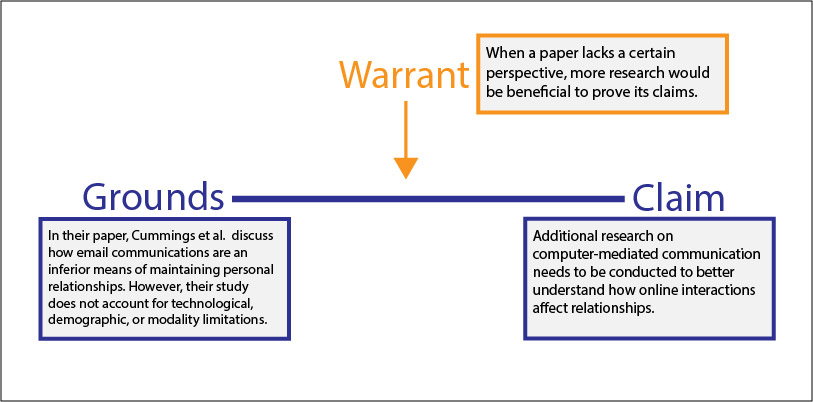
In Toulmin’s method, every argument begins with three fundamental parts: the claim, the grounds, and the warrant. 

1. A claim is the assertion that authors would like to prove to their audience. 
It is, in other words, the main argument.
2. The grounds of an argument are the evidence and facts that help support the claim.
3. The warrant, which is either implied or stated explicitly, is the assumption/explanation 
that links the grounds to the claim.

This image shows a diagram of an academic Toulmin argument with the grounds and claim linked by a warrant (that when a paper lacks a broad enough perspective, more research would be beneficial to prove its claims).


The next 3 components are not necessary for a Toulmin argument, but can be added when necessary: 

4. Backing refers to any additional support of the warrant. In many cases, the warrant is implied, and therefore the backing provides support for the warrant by giving a specific example that justifies the warrant.

5. The qualifier shows that a claim may not be true in all circumstances. Words like “presumably,” “some,” and “many” help your audience understand that you know there are instances where your claim may not be correct. 

6. The rebuttal is an acknowledgement of another valid view of the situation. (Counterclaim)

Including a qualifier or a rebuttal in an argument helps build your ethos, or credibility. When you acknowledge that your view isn’t always true or when you provide multiple views of a situation, you build an image of a careful, unbiased thinker, rather than of someone blindly pushing for a single interpretation of the situation


HOMEWORK for Thursday/Friday:
1. Watch the review video on Toulmin. Add to your notes. Go slowly through the samples where it demonstrates the application of these techniques. Toulmin Argument Video. (Also found in Schoology folder) 

2. In Schoology, complete the Toulmin Argument Annotation assignment. Found in this week's Schoology folder. 

3. Noredink.com- Assignment (Identifying claims and reasoning). 
Due: Sunday, January 10th (11:59 pm)