Happy New Year! 2021!
1. Academic Goals for 2nd semester.
2. The Toulmin Method
- Philosopher Stephen Toulmin's developed method for analyzing arguments.
- These elements of a Toulmin analysis can help you as both a reader and a writer. When you’re analyzing arguments as a reader, you can look for these elements to help you understand the argument and evaluate its validity. When you’re writing an argument, you can include these same elements in to ensure your audience will see the validity in your claims.
Toulmin Method's Six Component Parts: claim, grounds, warrant, qualifier, rebuttal, and backing.
* Following information from Purdue OWL/Toulmin Argument page
In Toulmin’s method, every argument begins with three fundamental parts: the claim, the grounds, and the warrant.
that links the grounds to the claim.
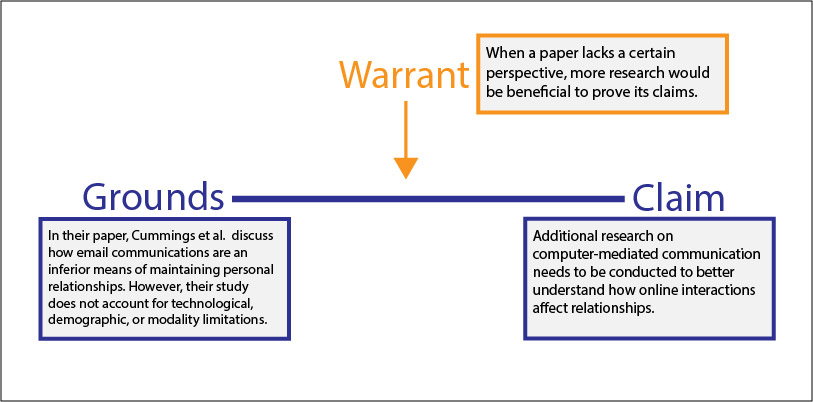
The next 3 components are not necessary for a Toulmin argument, but can be added when necessary:
4. Backing refers to any additional support of the warrant. In many cases, the warrant is implied, and therefore the backing provides support for the warrant by giving a specific example that justifies the warrant.
5. The qualifier shows that a claim may not be true in all circumstances. Words like “presumably,” “some,” and “many” help your audience understand that you know there are instances where your claim may not be correct.
6. The rebuttal is an acknowledgement of another valid view of the situation. (Counterclaim)
Including a qualifier or a rebuttal in an argument helps build your ethos, or credibility. When you acknowledge that your view isn’t always true or when you provide multiple views of a situation, you build an image of a careful, unbiased thinker, rather than of someone blindly pushing for a single interpretation of the situation


No comments:
Post a Comment